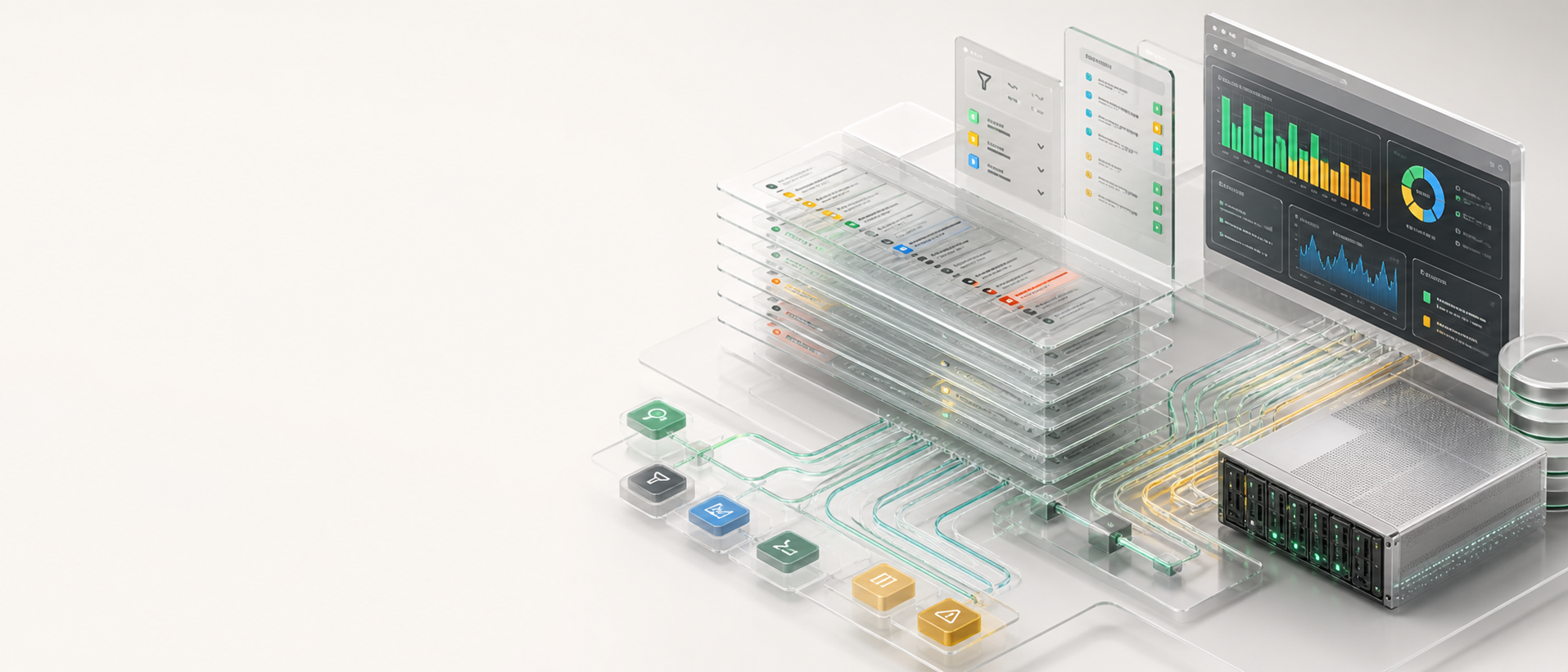
Turn live telemetry into managed action.
Alerts are valuable when the product owns rule evaluation, state, history, and evidence links. CloudGrid core observes live and persisted telemetry, manages alert lifecycle, and keeps delivery extensible through bridge-backed adapters.

Alerting belongs close to the telemetry semantics.
Teams need more than a notification channel. They need a project rule, the query that evaluated it, the state history, and the evidence link that shows why action was needed. CloudGrid keeps that core responsibility in the product while delivery remains flexible.
From telemetry condition to accountable response.
CloudGrid separates alert ownership from notification delivery. That gives leadership a clearer operating model: the product owns the rule and evidence; adapters deliver messages to the tools teams already use.
Rules can observe metrics, logs, and traces with the same project-scoped semantics the UI uses.
CloudGrid core manages evaluation, state transitions, silences, cooldowns, deduplication, evidence links, and alert history.
Built-in in-app and email delivery cover the base path; bridge-backed adapters can deliver to customer-owned channels.
What CloudGrid core owns
- Project-scoped rules over metrics, logs, and traces.
- Rule schedules, evaluation, state transitions, silences, cooldowns, and deduplication.
- Storage-read backed queries, so alert logic uses backend-owned telemetry semantics.
- In-app alert history and evidence links for project operators.
- Email delivery for safe alert summaries through the deployed SMTP runtime.
How delivery extends
- Bridge-backed adapters can deliver to Slack, Teams, WhatsApp, SMS, PagerDuty, or customer-owned gateways.
- Adapters listen to private message bridge dispatch work and return bounded delivery status.
- Provider credentials stay in adapter runtime configuration or customer secret stores.
- Adapters deliver notifications; CloudGrid core remains responsible for alert state and history.
- Evaluation, in-app persistence, email, and provider adapters can be sized for their own workload.
What improves when alerts are managed centrally.
Alerting creates business value when response, evidence, and ownership stay visible.
Alerting becomes a managed operating control instead of a scattered set of notification scripts.
Rules, state, and delivery status stay attached to the project that owns the telemetry.
White-label or customer-specific deployments can add delivery adapters without moving rule ownership out of CloudGrid core.